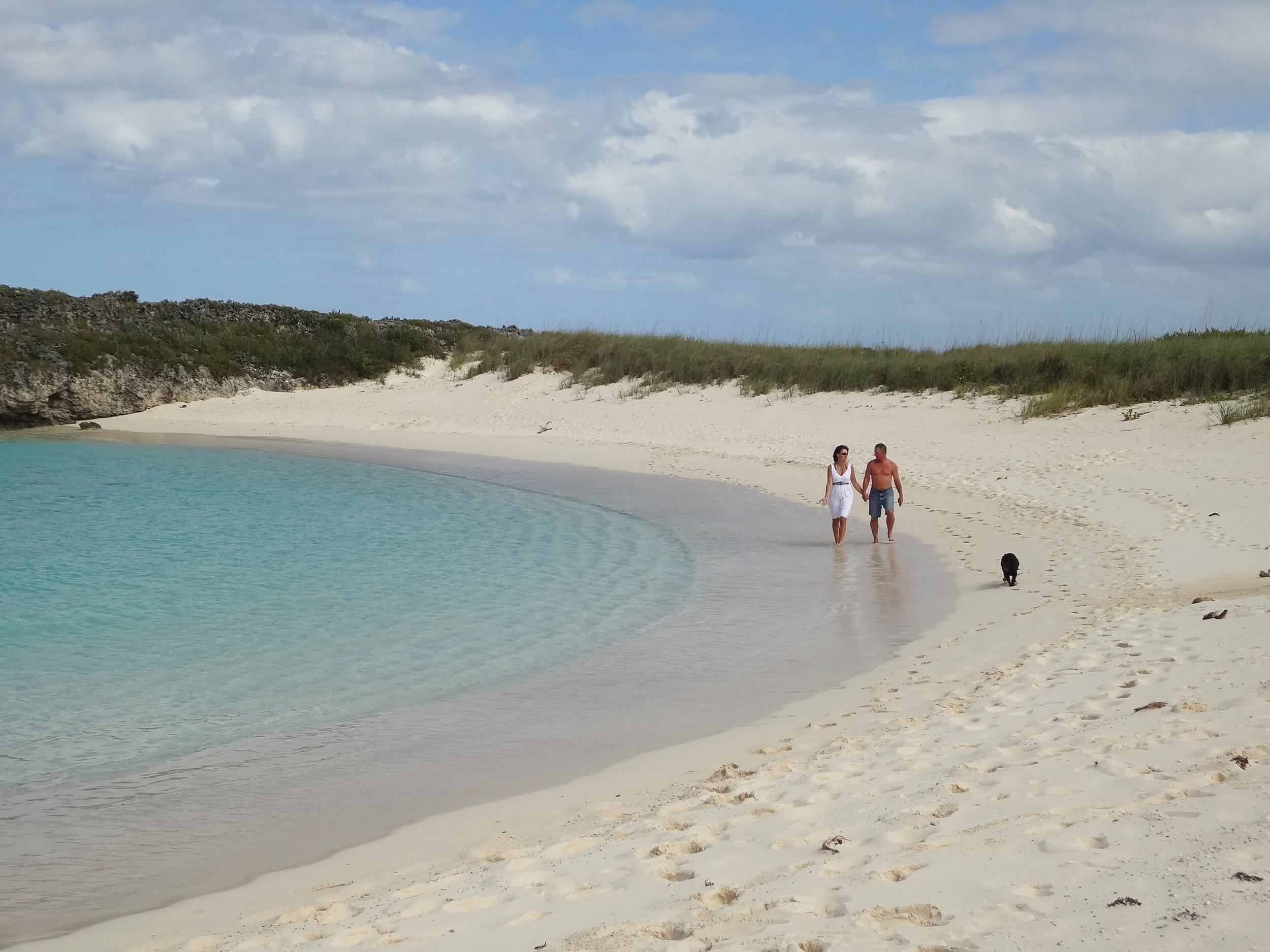

Long Island.
Blue water. Quiet discoveries.
A different kind of island day.
A little less rush.
A little more island.
Long Island suits a trip built around coastal scenery, unhurried exploration, and time outside. This is Long Island in The Bahamas—not Long Island, New York, and not a neighbourhood of Nassau.
Choose a few experiences that fit your interests, arrange the logistics, and leave room for the simple pleasure of being somewhere beautiful.
A remarkable change of blue.
A deep underwater opening set beside a beach makes Dean’s Blue Hole a striking natural sight. You can appreciate the contrast from shore without turning the visit into a diving challenge.
Deep water begins close to the shallows. Assess conditions locally and stay within your ability; do not jump from rocks or try breath-hold diving without qualified supervision.
Make time for the beach.
Cape Santa Maria is one of the island’s signature white-sand settings. Plan a beach-focused part of the day rather than treating it as a quick stop between drives.
Confirm your access point and available facilities. Water that looks calm in a photograph is not a substitute for checking the conditions on your visit.
Look beyond the shoreline.
Clarence Town’s harbour setting and twin-towered churches bring another side of the island into view. Visit respectfully and check access before entering a place of worship.
Pair a short exploration with a meal or an additional nearby stop, allowing the day to develop at a reasonable pace.
Caves, coastlines & time on the water.
Explore with context.
Arrange a visit to Hamilton’s Cave for a change from the beach. Confirm access, guiding arrangements, cost, and the footwear needed before setting out.
Ask about surfaces, lighting, and physical requirements if anyone in your party has mobility concerns. Do not assume a cave visit is an easy walk for everyone.
Choose the coast for the day.
Long Island’s Atlantic-facing shoreline and western beaches offer different coastal settings. Enjoy exposed shores as scenery when the sea is rough, and seek local advice before entering the water.
A sheltered location can still have changing currents and conditions. Let the weather influence the plan rather than forcing a particular beach day.
Match the activity to you.
Consider a fishing, snorkeling, or diving outing with a reputable operator. Clarify the experience level, equipment, group size, pickup point, and cancellation policy.
Choose an outing for its fit, not just its photographs. Boat trips depend on weather; keep a land-based alternative ready.
Getting to Long Island.
Confirm the actual airport.
The island’s two airport names to recognize are Stella Maris (SML) and Deadman’s Cay (LGI). Check which airport your booked service actually uses and whether operations or construction affect it. Do not assume both have the service you need on your dates.
If connecting through Nassau, verify the onward flight, baggage arrangements, check-in deadline, and connection time before committing to the rest of your trip. An overnight stop may suit some schedules better than a tight connection.
Confirm with your host:
- Which arrival airport works best for your accommodation?
- Who will meet you, where, and at what price?
- Can you collect a rental vehicle when you arrive?
- What happens if the flight is delayed?
- How early should you leave for your return flight?
Airport names are planning references, not a flight schedule. Confirm routes and operating arrangements directly with your airline and accommodation.
Where should you stay?
Choose accommodation around the experiences you care about most. The suggestions below compare areas and stay styles; they are not endorsements of particular properties.
| Area or stay style | Why consider it? | What to check |
|---|---|---|
| Cape Santa Maria / northern end | A beach-focused base and quieter days near your accommodation. | Beach access, dining arrangements, transfer times, and how you will reach sights farther south. |
| Stella Maris area | A northern base to compare with your flight plans and chosen activities. | Exact location, facilities, road access, and the distance to your preferred beach. |
| Central or southern base | Planning days around Hamilton’s Cave, Dean’s Blue Hole, and Clarence Town. | Driving routes, local services, available restaurants, and airport pickup. |
| Self-catering rental | More control over meals and a home-style base. | Grocery access, kitchen equipment, drinking-water arrangements, and transport. |
A beachfront listing does not necessarily mean easy swimming directly outside. Ask about the actual shoreline and the facilities that matter to your group.
When to visit & how to get around.
Plan around your activities.
Compare the forecast and typical conditions for your dates. A beach break, a fishing trip, and a dive-focused stay each depend on different conditions. Ask your activity provider what is realistic.
Atlantic hurricane season runs June through November. Understand your booking and insurance terms rather than assuming every weather disruption qualifies for a refund.
Arrange your wheels.
If you want to explore beyond your base, compare a rental vehicle with prearranged drivers or excursions. Confirm availability rather than relying on an on-demand option after arrival.
Drive on the left in The Bahamas. Check rental requirements, fuel arrangements, insurance, and which roads the vehicle is permitted to use.
Group nearby stops.
Do not treat the island as a compact resort complex. Build your day around a geographic area, plan a meal stop, and leave time for the return journey.
Carry water and save addresses and maps offline. Ask about road conditions and local opening hours before leaving your accommodation.
Leave room for a local meal.
Ask what is fresh today.
Conch is a familiar Bahamian favourite, and mutton is a Long Island specialty. Ask local restaurants what they are serving, how it is prepared, and what they recommend.
Explain allergies directly. If you prefer cooked seafood, say so when ordering rather than assuming every preparation is the same.
Plan a little, then enjoy it.
Confirm restaurant opening days and whether reservations are needed. If your accommodation is self-catering, ask where to shop and what to arrange before arrival.
A modest café stop or a leisurely lunch can be the point of the outing, not simply the gap between attractions.
Three island days.
No need to hurry.
These are full sightseeing days, excluding arrival and departure. Reorder them for your accommodation, driving routes, forecast, and confirmed activities.
A beach-focused beginning.
Morning: Choose an accessible beach near your base or plan time at Cape Santa Maria if the location works. Check conditions before swimming.
Afternoon: Keep lunch and a second small stop nearby. Give yourself time to learn the local driving routes.
Evening: Arrange dinner and enjoy a quiet finish rather than adding a long return drive after dark.
A day of different perspectives.
Morning: Visit Hamilton’s Cave if a tour or access arrangement has been confirmed.
Afternoon: Continue toward Dean’s Blue Hole and Clarence Town as time and conditions allow. Leave room for a proper lunch break.
Evening: Return at a comfortable hour. Shorten the list if the drive from your base makes the day feel rushed.
Water time—or more shoreline.
Morning: Take a prebooked fishing, snorkeling, or diving outing suited to your experience.
Afternoon: If sea conditions change the plan, swap in a local exploration, beach walk, or restful afternoon.
Evening: Keep your final meal simple and confirm the next day’s airport transfer or departure arrangements.
Before you go.
How many nights should I allow?
As an editorial starting point, consider four or five nights if flight arrangements work: that leaves room for arrival, three flexible days, and departure. A longer stay may suit fishing, diving, or a slower beach holiday.
Is Dean’s Blue Hole a casual swimming pool?
No. It is a natural site with a sharp transition to very deep water. Conditions and your swimming ability matter. Enjoying the view from shore is a valid way to visit; diving is not a requirement.
Should I rent a car?
If exploring independently is important, arrange a vehicle in advance or confirm a practical alternative. If your plan is mainly to stay at one property, ask what transfers, meals, and outings it can actually provide.
What should I pack?
Sun protection, light layers, a hat, suitable footwear, insect repellent, charging equipment, and personal essentials. Ask your activity operator what equipment is included before bringing bulky gear.
What should I check before booking?
Entry documents for your nationality, current government travel guidance, flight operating arrangements, insurance, payment methods, and the total cost of accommodation and transport. Keep a buffer around onward connections.
How can I keep the trip affordable?
Compare the whole cost: flights, transfers, vehicle hire, fuel, meals, taxes, and excursions. A lower room rate can lose its advantage if it adds substantial driving or meal costs. Plan a few priority activities and enjoy the rest at a gentler pace.

More know-how.
Wherever you go.
Discover over 2,000 travel tips, tricks, and hacks in DeBora Rachelle’s practical travel companion.
Explore the book